



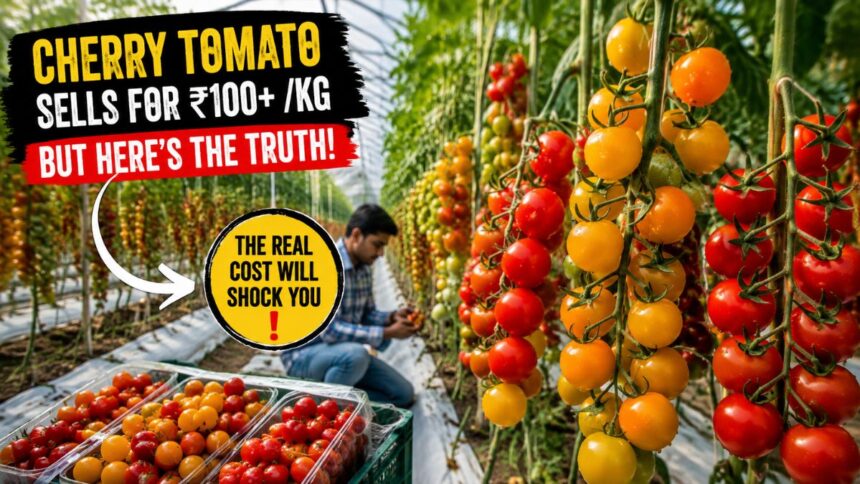
Cherry Tomato Farming in India: Cherry tomatoes sell for several times the price of ordinary tomatoes, which makes this look like an easy upgrade for any tomato grower. It isn’t. This guide is for farmers and agri-entrepreneurs seriously weighing cherry tomato as a business: what it really costs to set up, why it usually belongs in a polyhouse, the intensive skill it demands, and the premium market you must line up before you plant. Grown well for the right buyer, it’s one of the more rewarding horticulture crops in India — but it rewards preparation, not enthusiasm.
- Why cherry tomatoes attract so much interest
- Is cherry tomato farming profitable?
- The decision that defines this crop: polyhouse or open field
- What makes it a “premium” crop — and the market reality
- Choosing a variety
- How to grow it — an intensive, skilled crop
- The economics — honestly
- Who buys cherry tomatoes — plan this first
- Government support
- Is cherry tomato farming worth it?
- Frequently asked questions
Why cherry tomatoes attract so much interest
The appeal is simple: cherry tomatoes command a premium. In the right markets they sell for roughly ₹80–150 a kilo, while ordinary tomatoes swing between about ₹10 and ₹40. Demand is rising from urban salad culture, gourmet and organic stores, hotels and restaurants, and especially quick-commerce apps, where neat punnets of red and yellow cherry tomatoes are a staple.
Here’s the catch that this guide is built around: that premium is real only in premium channels, and the crop is demanding. Dump cherry tomatoes into a general mandi and you’ll get little more than ordinary tomato rates. Grow them without the skill and the right structure and you’ll struggle to hit the quality that earns the premium. The price is high because doing it well is hard.
Is cherry tomato farming profitable?
Cherry tomato farming can be highly profitable because the fruit sells at a premium — often several times the price of regular tomato — especially when grown in a polyhouse for consistent quality. But it needs real investment, skilled management and a premium urban or gourmet market. Without those three, the premium disappears and the economics don’t work.
The decision that defines this crop: polyhouse or open field
More than variety or anything else, this choice shapes your cherry tomato business. Cherry tomato genuinely rewards protected cultivation — a polyhouse or net house — more than most vegetables, because the premium depends on clean, uniform, unblemished fruit that open fields struggle to deliver consistently.
| Factor | Polyhouse / net house | Open field |
|---|---|---|
| Setup cost | High — roughly ₹25–40 lakh/acre before subsidy | Low |
| Quality and price | Premium, uniform, export-grade | Lower, more blemish and loss |
| Yield | Much higher, continuous, year-round | Lower, seasonal |
| Weather and pest risk | Sharply reduced | High |
| Skill required | High | Moderate |
| Best suited to | Premium, HoReCa and quick-commerce buyers | Local and general sale |
A polyhouse removes the rain, heat and pest pressures that ruin open-field cherry tomato quality, and it lets an indeterminate vine crop continuously for many months. That’s why cherry tomato is repeatedly listed among the most profitable protected-cultivation crops. Open-field cherry tomato is possible and far cheaper to start, but expect lower quality, more disease, and a weaker price.
What makes it a “premium” crop — and the market reality
The economics of cherry tomato are driven by price and a long harvest, not by tonnage. A cherry tomato weighs a fraction of a round tomato, so you won’t match a beef tomato’s sheer kilos — but you earn multiples per kilo, and an indeterminate crop keeps yielding for months.
That only works if you sell into channels that pay for quality: premium urban retail, gourmet and organic grocers, hotels and restaurants, quick-commerce platforms, and in some cases exporters. This is a market-access crop first and an agronomy crop second. Decide your buyer before you build anything — the polyhouse investment only makes sense if you have somewhere to sell premium fruit at a premium price.
Choosing a variety
For a serious operation, use indeterminate F1 hybrids, which grow vertically and keep fruiting through the whole cycle — unlike determinate types that set fruit in one burst and stop, wasting a polyhouse’s long-season advantage. When selecting, prioritise:
- Leaf-curl virus tolerance (ToLCV / TYLCV), which is essential in much of India.
- Firm fruit with a long shelf life (good hybrids hold 12–18 days), which premium retail and quick-commerce demand.
- Uniform size and colour for clean grading and punnet-packing.
Cherry tomato comes in red, and in prized yellow and orange types that fetch a gourmet premium; grape tomatoes are a related premium shape. Because performance is region- and season-specific, confirm the exact hybrid and seed rate with a trusted supplier or your state horticulture department, and always use fresh quality seed.
How to grow it — an intensive, skilled crop
Be honest with yourself here: cherry tomato under protected cultivation is a skill-heavy, hands-on crop, not a set-and-forget one. The main jobs across a long cycle:
- Nursery and transplanting: raise healthy seedlings in a clean nursery and transplant into well-prepared, drip-irrigated beds.
- Training and trellising: indeterminate vines are trained vertically up strings and need regular support as they climb.
- Pruning and de-suckering: removing side shoots to channel the plant’s energy into fruit and airflow is continuous work and directly affects yield and quality.
- Pollination: inside a polyhouse there’s no wind or free bee movement, so pollination often needs help — mechanical vibration or managed pollinators — to set fruit properly. This surprises many first-timers.
- Fertigation: feeding precise nutrients through the drip system on a schedule tuned to the crop stage.
- Disease and pest management: leaf curl virus, blights and wilts are the main threats; insect netting, clean practices and prompt, approved measures are essential.
- Continuous harvesting: you pick ripe clusters repeatedly over months, grading and packing carefully to protect the premium.
This sustained management over a long crop is exactly why a first cycle is a steep learning curve — and why starting small to learn is wise.
Also Read: Polyhouse Subsidy in Andhra Pradesh: The Biggest Mistake Farmers Make Before Construction Starts
The economics — honestly
Cherry tomato can pay very well, but the numbers demand respect. The big variable is the structure.
| Item | Indicative figure (estimate) |
|---|---|
| Polyhouse setup | ~₹25–40 lakh/acre before subsidy; roughly ₹12–20 lakh/acre after subsidy |
| Government subsidy | Up to 50% (higher for SC/ST) under NHM / MIDH |
| Running cost per cycle | ~₹3–6 lakh/acre |
| Premium price | ~₹80–150/kg in premium channels |
| Crop duration | Long — continuous harvest over many months |
A well-run polyhouse cherry tomato crop can deliver strong net returns because of that price premium and long harvest window. But notice what those returns assume: a working polyhouse, skilled management, high grade, and a premium buyer. The eye-catching “₹15–20 lakh per acre profit” figures you’ll see are best-case, for experienced growers hitting premium markets — they are not what a beginner earns in year one while still learning to train, pollinate and manage disease.
The sensible entry, echoed by most experienced protected-cultivation growers, is to start small — a few hundred to a thousand square metres — learn the system on one cycle, secure your market, and scale from there rather than betting a full acre on your first attempt.
Who buys cherry tomatoes — plan this first
Because the whole business rests on the premium, map your market before you invest:
- Premium urban retail and gourmet/organic grocers that stock punnets.
- Hotels, restaurants and caterers using cherry tomatoes in salads and plating.
- Quick-commerce and online grocery platforms, a fast-growing and natural channel for neat, graded cherry tomatoes.
- Exporters, in some regions, for high-grade fruit.
Consistent quality, attractive grading and reliable supply are what these buyers reward — and what keep them buying from you.
Government support
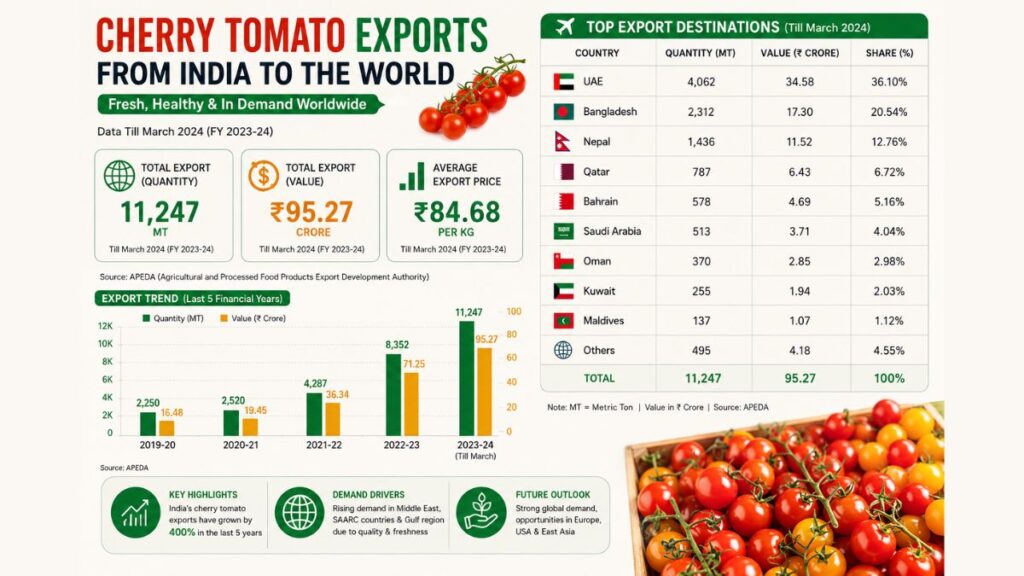
Because cherry tomato is best grown under protected cultivation, the most relevant support is the polyhouse and net-house subsidy under the National Horticulture Mission (NHM) / MIDH, typically covering a substantial share of the structure cost, delivered through your state horticulture department. The National Horticulture Board and NABARD-linked finance can also help fund structures and cold chain.
Subsidy rates, categories and eligibility vary by state and change over time, so confirm the current position and apply through your district horticulture office before counting on any figure.
Is cherry tomato farming worth it?
For the right grower, cherry tomato is one of the more rewarding horticulture ventures in India. The price premium is genuine, demand from premium retail and quick-commerce is rising, protected cultivation gives you quality and year-round income, and subsidies cut the biggest cost. If you have capital or subsidy access, the appetite to learn an intensive crop, and a premium market lined up, it can be a strong business.
But go in clear-eyed about the downsides:
- High setup cost. A polyhouse is a serious investment; open-field cherry tomato earns far less.
- High skill demand. Training, pruning, pollination, fertigation and disease control make the learning curve steep, and first-year mistakes are common.
- It’s a niche premium crop. Without an urban, HoReCa or quick-commerce buyer, the premium vanishes.
- Long, labour-intensive cycle ties up capital and demands sustained management.
- The viral profit figures are best-case, not what beginners make.
The smartest way in is to start small, learn one full cycle, secure your premium buyer first, and scale only once you can consistently produce and sell high-grade fruit. Treated as a skilled, market-led horticulture business rather than a shortcut to big money, cherry tomato genuinely rewards the growers who respect what it takes.
Frequently asked questions
Is cherry tomato farming profitable in India?
It can be very profitable because cherry tomatoes sell at several times the price of ordinary tomatoes, especially when grown in a polyhouse for premium quality. But profitability depends on real investment, skilled management and a premium market — without those, you won’t capture the premium that makes it worthwhile.
Can cherry tomato be grown in the open field or only in a polyhouse?
It can be grown in the open field, but a polyhouse or net house is strongly preferred because it delivers the clean, uniform, unblemished fruit that earns the premium, along with higher, year-round yields and far less pest and weather risk. Open-field cherry tomato is cheaper to start but fetches lower quality and price.
How much does it cost to start cherry tomato farming?
Open-field cultivation is relatively low-cost, but a polyhouse — where cherry tomato performs best — runs roughly ₹25–40 lakh per acre before subsidy, coming down substantially after NHM/MIDH support, plus a few lakh per cycle in running costs. Many growers start with a smaller structure to limit risk.
Where can I sell cherry tomatoes?
To premium urban retail and gourmet or organic stores, hotels and restaurants, and quick-commerce and online grocery platforms, with exporters as an option for high-grade fruit. Because the premium exists only in these channels, arrange your buyer before investing rather than relying on the general mandi.
How long does a cherry tomato crop keep producing?
Grown as an indeterminate hybrid in a polyhouse, a cherry tomato crop fruits continuously for many months, giving a long, steady harvest window. This long cycle is a major advantage for income, but it also means sustained labour and management throughout.
Which cherry tomato variety is best?
For commercial growing, choose indeterminate F1 hybrids with leaf-curl-virus tolerance, firm long-shelf-life fruit and uniform size and colour, in red or premium yellow and orange types. The exact best hybrid depends on your region and season, so confirm with a trusted supplier or your state horticulture department.