



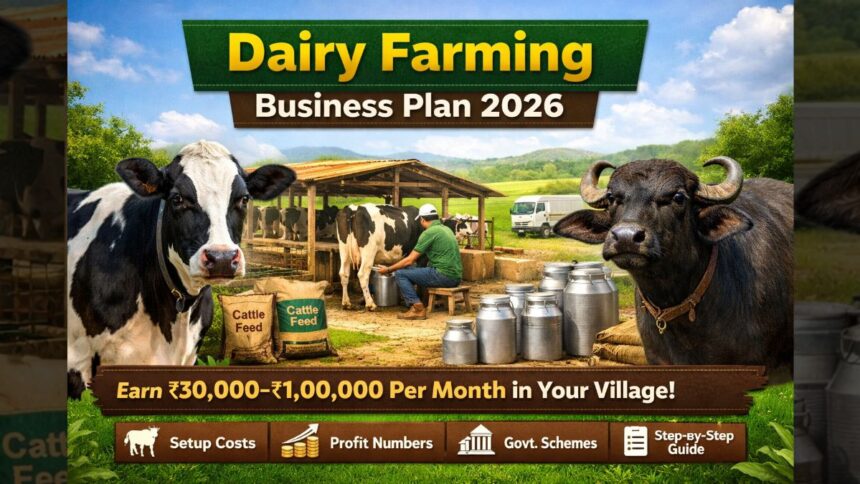
Let me ask you something straight — do you know a business that gives you income every single day, doesn’t need high-tech machinery, and can be started even in a small village with ₹2–5 lakh?
- What is Dairy Farming? (Simple Explanation)
- Why Dairy Farming is a Smart Business in 2026
- Dairy Farming Cost Breakdown (India 2026 — Realistic Numbers)
- Dairy Farming Profit Analysis — Real Monthly Numbers
- Step-by-Step Guide to Start Dairy Farming in India
- Step 1: Training First, Then Investment
- Step 2: Choose the Right Cattle Breed
- Step 3: Arrange Land and Build Shed
- Step 4: Arrange Fodder Supply
- Step 5: Register and Apply for Loans/Subsidies
- Step 6: Set Up Your Milk Marketing
- Expert Tips for Successful Dairy Farming
- Common Mistakes to Avoid in Dairy Farming
- Cow vs Buffalo Dairy Farming — Which is Better?
- Key Government Schemes for Dairy Farmers in 2026
- Conclusion — Is Dairy Farming Worth It in 2026?
- FAQs — Dairy Farming Business in India
Dairy farming in India is exactly that.
But here’s the problem — most beginners either invest without any plan and lose money, or they never start because they think it’s too complicated. Both are mistakes.
In this guide, I’m breaking down the complete dairy farming business plan for 2026 — from actual setup costs to monthly profit figures — the way an experienced farmer would explain it to a friend.
No jargon. No fluff. Just real numbers and real steps.
What is Dairy Farming? (Simple Explanation)
Dairy farming means rearing cows or buffaloes specifically to produce and sell milk. It’s one of the oldest and most stable agricultural businesses in India.
India is the world’s largest milk producer — we produce over 230 million tonnes of milk every year. And demand keeps growing, especially for quality milk, ghee, paneer, and curd.
Whether you’re in UP, Punjab, Maharashtra, Rajasthan, or Chhattisgarh — dairy farming works everywhere. The model is simple:
- Buy good cattle (cow or buffalo)
- Feed and care for them properly
- Sell milk daily to local dairy cooperative, private dairy, or directly to households
- Earn consistent daily income
Simple model. But execution matters a lot — and that’s what we’ll cover.
Why Dairy Farming is a Smart Business in 2026
You might wonder — with so many business options, why dairy farming? Here’s what makes it genuinely attractive:
- Daily Income: Milk sells every day. Unlike crops, you don’t wait 6 months for returns.
- Government Support: Multiple schemes like NABARD Dairy Loan, Pashu Kisan Credit Card, and state subsidies make it affordable.
- Growing Demand: India’s dairy market is expected to grow past ₹30 lakh crore by 2030. Demand is outpacing supply.
- Low Technical Barrier: You don’t need a degree to start — just proper training and discipline.
- Byproduct Value: Cow dung is used for biogas, organic fertilizer, and vermicomposting — extra income streams.
- Scalable: Start with 2 animals. Scale to 50+ once you have experience and cash flow.
💡 Many agri-entrepreneurs in rural India earn ₹40,000–₹80,000/month from dairy farming. It’s not a dream — it’s a real, achievable number.
Dairy Farming Cost Breakdown (India 2026 — Realistic Numbers)
This is what most guides skip or get wrong. Let me give you a ground-level cost estimate for starting a small dairy farm with 5 cows.
Initial Setup Cost (One-Time)
| Expense Item | Estimated Cost (₹) |
|---|---|
| 5 Crossbred Cows (HF/Jersey) | ₹2,00,000 – ₹2,50,000 |
| Shed Construction (500 sq ft) | ₹80,000 – ₹1,20,000 |
| Water Tank + Pipes | ₹15,000 – ₹25,000 |
| Milking Equipment (Manual) | ₹5,000 – ₹10,000 |
| Fodder Storage Setup | ₹10,000 – ₹20,000 |
| Miscellaneous (Tools, Fencing) | ₹10,000 – ₹15,000 |
| TOTAL (Approx.) | ₹3,20,000 – ₹4,40,000 |
📌 If you opt for a NABARD-backed dairy loan, you can get 25–33% subsidy on setup cost. This brings your actual investment down significantly.
Monthly Operating Cost (5 Cows)
| Monthly Expense | Cost (₹/month) |
|---|---|
| Dry Feed (Concentrate/Bhusa) | ₹8,000 – ₹10,000 |
| Green Fodder (Napier/Maize) | ₹3,000 – ₹5,000 |
| Veterinary + Medicines | ₹1,500 – ₹2,500 |
| Labour (1 helper) | ₹5,000 – ₹7,000 |
| Electricity + Water | ₹1,000 – ₹2,000 |
| Miscellaneous | ₹1,000 – ₹1,500 |
| TOTAL Monthly Cost | ₹19,500 – ₹28,000 |
Dairy Farming Profit Analysis — Real Monthly Numbers
Here’s the part everyone wants to know. Let’s be realistic — not optimistic, not pessimistic.
Income Calculation (5 Crossbred Cows)
Average milk yield per cow: 10–15 litres/day (HF or Jersey crossbred). Let’s take a conservative 10 litres/cow/day.
| Parameter | Value |
|---|---|
| Total daily milk (5 cows × 10L) | 50 litres/day |
| Selling price (cooperative/private) | ₹35 – ₹55 per litre |
| Daily gross income (at ₹40/L) | ₹2,000/day |
| Monthly gross income (30 days) | ₹60,000/month |
| Monthly operating cost | ~₹24,000/month |
| Monthly net profit | ~₹36,000/month |
If you sell directly to households at ₹50–60/litre (without middleman), your profit jumps to ₹45,000–₹55,000/month.
💰 With 10 cows, many farmers earn ₹70,000–₹1,00,000/month net. Scale is the game in dairy farming.
ROI — When Will You Break Even?
With an investment of ₹4 lakh and monthly profit of ₹35,000–₹40,000, you typically recover your full investment in 10–14 months. That’s a very strong ROI for any agriculture-based business.
Agropotli Profit Calculator
Step-by-Step Guide to Start Dairy Farming in India
Here’s the practical roadmap — from zero to your first sale:
Step 1: Training First, Then Investment
Before spending a single rupee, attend a short dairy farming training program. NABARD, KVKs (Krishi Vigyan Kendra), and state animal husbandry departments offer free or low-cost training. Just 5–7 days of hands-on training can save you lakhs.
Step 2: Choose the Right Cattle Breed
Your breed choice is the most important decision. Here’s a quick comparison:
| Breed | Milk Yield/Day | Best For | Price Range |
|---|---|---|---|
| HF (Holstein Friesian) | 15–25 litres | Cooler climates (Punjab, HP) | ₹45,000 – ₹65,000 |
| Jersey Crossbred | 10–18 litres | Most Indian states | ₹35,000 – ₹55,000 |
| Murrah Buffalo | 8–14 litres | High-fat milk, North India | ₹60,000 – ₹90,000 |
| Sahiwal Cow | 8–12 litres | Hot & arid regions | ₹35,000 – ₹50,000 |
| Gir Cow (A2 milk) | 6–10 litres | Organic/premium market | ₹40,000 – ₹80,000 |
Step 3: Arrange Land and Build Shed
You need 1,000–1,500 sq ft of land for 5 cows. Key shed requirements:
- East-facing for morning sunlight
- Well-ventilated — avoid heat stress (reduces milk yield)
- Proper drainage — prevents disease
- Separate area for feed storage and calves
Step 4: Arrange Fodder Supply
Feed cost is 60–70% of your total operating cost. To reduce it, grow your own green fodder. Napier grass, maize, and berseem are excellent choices. With even half an acre, you can meet 40–50% of fodder needs yourself.
Step 5: Register and Apply for Loans/Subsidies
- Register your farm with local Animal Husbandry Department
- Apply for NABARD Dairy Entrepreneurship Development Scheme (DEDS)
- Get Pashu Kisan Credit Card (PKCC) for working capital
- Check state-specific schemes (e.g., Chhattisgarh has dedicated dairy development programs)
Step 6: Set Up Your Milk Marketing
This step is often ignored but it’s critical. Your options:
- Join local cooperative (Amul, Mother Dairy, state co-op) — stable but lower price
- Sell directly to households — higher price, more effort
- Supply to private dairies or chilling centres
- Process and sell ghee, paneer, curd (highest margin)
Expert Tips for Successful Dairy Farming
- Feed timing matters: Cows produce more milk when fed at consistent times. Don’t change schedule randomly.
- Water is everything: A dairy cow drinks 80–100 litres of water/day. Insufficient water = less milk. Simple.
- Record keeping: Maintain a simple notebook — daily milk yield, health records, expenses. This data will save you money.
- Vaccination schedule: Don’t skip FMD (Foot & Mouth Disease) and HS (Hemorrhagic Septicemia) vaccines. Prevention is 10x cheaper than cure.
- Dry cow management: Manage the dry period (last 2 months before calving) well — this affects next lactation heavily.
- Don’t overcrowd: Overcrowded sheds increase stress and disease. Maintain 40–50 sq ft per animal minimum.
🌿 Tip from experienced farmers: Start with 3–5 cows, not 20. Learn the business first. Scale once you understand the daily rhythm.
Common Mistakes to Avoid in Dairy Farming
These are the mistakes that have cost beginners lakhs of rupees. Don’t repeat them:
- Buying sick or unknown animals: Always get a vet check before buying. Ask for lactation history.
- Neglecting feed quality: Cheap feed = low milk yield. The economics don’t work.
- No milk marketing plan before buying cows: Decide where you’ll sell BEFORE you buy animals.
- Ignoring heat stress in summer: Install foggers or fans in sheds during peak summer. Milk yield can drop 20–30% in heat.
- Borrowing too much too soon: Many farmers take big loans and collapse when something goes wrong. Start lean.
- No insurance: Livestock insurance is cheap (1–2% of animal value). One death without insurance can wipe out a season’s profit.
Cow vs Buffalo Dairy Farming — Which is Better?
| Factor | Crossbred Cow | Murrah Buffalo |
|---|---|---|
| Milk Yield | Higher (10–25L) | Moderate (8–14L) |
| Fat Content | 3.5–4% | 7–8% (much higher) |
| Milk Price | ₹35–55/L | ₹50–80/L (premium) |
| Initial Cost | ₹35,000–₹65,000 | ₹60,000–₹90,000 |
| Adaptability | Moderate (needs care in heat) | High (tolerates Indian climate well) |
| Best For | Volume-based selling | Quality/ghee business |
Verdict: For beginners in most Indian states, HF or Jersey crossbred cows offer the best balance of cost, yield, and manageability. If you’re targeting the ghee or paneer market, go for Murrah buffalo.
Key Government Schemes for Dairy Farmers in 2026
- NABARD DEDS: Subsidy of 25% (33% for SC/ST) on eligible project cost for new dairy units
- Pashu Kisan Credit Card: Revolving credit for feed, medicines, and working capital at low interest
- Rashtriya Gokul Mission: Focuses on indigenous breed development and artificial insemination
- State-level schemes: Most states have their own dairy development missions — check your state animal husbandry website
Conclusion — Is Dairy Farming Worth It in 2026?
Yes. Absolutely — if you approach it with a plan.
Dairy farming is not a get-rich-quick scheme. It’s a consistent, daily-income business that rewards discipline, good management, and smart marketing. With ₹3–5 lakh investment and 5 good cows, you can realistically earn ₹30,000–₹45,000/month net.
Scale it to 10–15 cows over 2 years, and you’re looking at a ₹70,000–₹1,20,000/month business that beats most urban salaries.
The opportunity is real. The market is growing. Government support is available. What’s needed is your commitment.
🚀 Start small. Learn fast. Scale smart. That’s the Agropotli way of building a successful dairy farming business.
FAQs — Dairy Farming Business in India
Q1: How much does it cost to start dairy farming in India with 5 cows?
Starting a dairy farm with 5 crossbred cows in India requires approximately ₹3.5 – ₹4.5 lakh as initial investment, including cattle purchase, shed construction, and equipment. Monthly operating cost comes to around ₹20,000–₹28,000.
Q2: What is the profit from dairy farming with 10 cows?
With 10 good crossbred cows yielding an average of 10 litres/day and selling at ₹40/litre, gross income is around ₹1,20,000/month. After deducting operating costs of ₹45,000–₹55,000, net profit is approximately ₹65,000–₹75,000/month.
Q3: Which cow breed is best for dairy farming in India?
For most Indian states, HF (Holstein Friesian) or Jersey crossbred cows offer the best milk yield at 10–20 litres/day. For heat-tolerant, low-maintenance farming, Sahiwal or Gir cows are excellent. Murrah buffalo is preferred for high-fat milk and ghee production.
Q4: Can I get a loan or subsidy for dairy farming in India?
Yes. NABARD’s Dairy Entrepreneurship Development Scheme (DEDS) offers 25–33% capital subsidy on eligible project costs. You can also apply for Pashu Kisan Credit Card (PKCC) for working capital. Apply through your nearest bank or NABARD district office.
Q5: Is dairy farming profitable for beginners in villages?
Yes, dairy farming is highly viable for village-based beginners. Lower land costs, access to green fodder, and proximity to local dairy cooperatives give rural farmers a natural advantage. With proper training, breed selection, and a clear milk marketing plan, even a 3–5 cow unit can generate ₹25,000–₹40,000/month net income.
Published by Agro Potli | India’s Trusted Agriculture Blog