




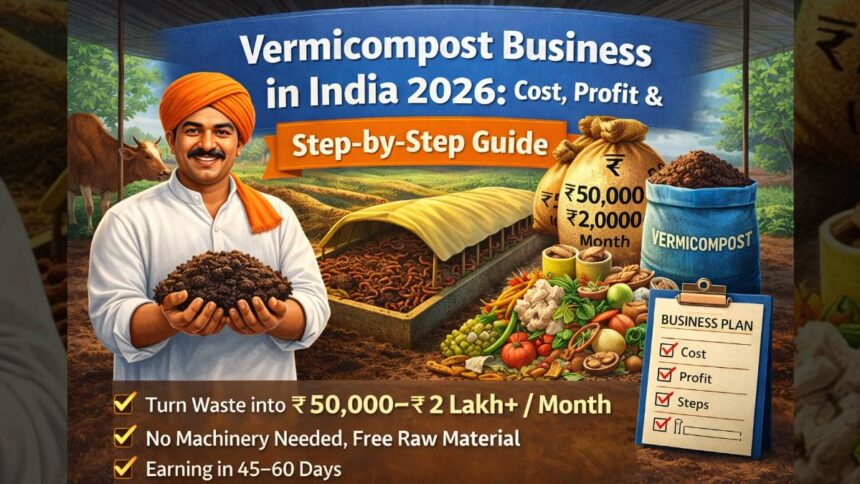
Imagine turning kitchen waste, cow dung, and dried leaves into ₹50,000–₹2,00,000 per month — sitting right on your own farm or backyard. Sounds too good?
- What is Vermicompost? (Simple Answer)
- Why Vermicompost is a Hot Business Opportunity in 2026
- Vermicompost Business Setup Cost in India 2026 (Realistic Breakdown)
- Vermicompost Business Profit — Realistic Numbers (Not Hype)
- Step-by-Step Vermicompost Making Process (Practical Guide)
- Step 1 — Choose the Right Location
- Step 2 — Build Your Vermi Beds
- Step 3 — Prepare the Bedding Material
- Step 4 — Introduce Earthworms
- Step 5 — Add Organic Feed Regularly
- Step 6 — Maintain Moisture (Most Critical Step)
- Step 7 — Harvest After 45–60 Days
- Step 8 — Store and Sell
- Expert Tips to Maximize Vermicompost Profit
- Common Mistakes to Avoid in Vermicompost Business
- Vermicompost vs Regular Compost vs Chemical Fertilizer
- Should You Start a Vermicompost Business?
- FAQs — Vermicompost Business in India 2026
Farmers across Chhattisgarh, Maharashtra, and Tamil Nadu are already doing it. And in 2026, the window has never been wider.
The demand for vermicompost is exploding. With organic farming mandates tightening, chemical fertilizer prices hitting the roof, and buyers willing to pay ₹10–₹18 per kg, this is one of the most low-risk, high-return agri-businesses available today.
But here’s where most beginners go wrong — they start without understanding the full process, underestimate earthworm management, or buy from wrong sources. This guide fixes all of that. Whether you have ₹15,000 or ₹5 lakh to invest, there’s a vermicompost business model that fits you.
What is Vermicompost? (Simple Answer)
📌 Quick Answer: Vermicompost is organic fertilizer produced when earthworms (usually Eisenia fetida) digest agricultural waste, kitchen scraps, and cow dung. The worm castings are rich in NPK, micronutrients, and beneficial microbes — making it one of the most nutrient-dense soil amendments available.
In plain language — you feed organic waste to earthworms, and they convert it into dark, crumbly, odorless fertilizer within 45–60 days. It’s nature’s own factory, and your job is just to manage the conditions.
One important point: vermicompost is NOT the same as regular compost. Regular compost uses heat decomposition and takes 90–120 days. Vermicompost uses worms (45–60 days), produces a more consistent product, and sells at a much higher price.
Why Vermicompost is a Hot Business Opportunity in 2026
Organic farming area in India crossed 4.4 million hectares in 2024 and is still growing fast. Farmers shifting away from urea and DAP need quality organic inputs. That demand is creating a serious supply gap — which you can fill.
Here’s why smart agri-entrepreneurs are jumping into vermicompost production right now:
- Raw material is free or nearly free — cow dung, kitchen waste, farm residue. You’re converting “garbage” into gold.
- No heavy machinery needed — just beds, worms, and basic management. Even a small shed works.
- Subsidies available — NABARD and state governments offer 50–75% subsidies for organic input units under various schemes.
- Consistent buyer demand — organic vegetable farms, nurseries, horticulture units, and export farms are all buying in bulk.
- Scalable from day one — start with 1 bed, scale to 100+ beds using the profit from the first cycle.
Vermicompost Business Setup Cost in India 2026 (Realistic Breakdown)
One of the most common questions: “Kitna lagega?” Here’s a clear breakdown for two scales — small (home-based) and medium (commercial).
Investment Table
| Item | Small Setup (15 Beds) | Medium Setup (50 Beds) |
|---|---|---|
| Earthworms (1 kg/bed) | ₹3,000 | ₹10,000 |
| Bed / Tank Construction | ₹8,000 | ₹35,000 |
| Shade Net / Shed Structure | ₹5,000 | ₹25,000 |
| Raw Material (1st batch) | Free / ₹1,000 | ₹3,000 |
| Tools & Packaging | ₹2,000 | ₹7,000 |
| Total Investment | ₹18,000–₹20,000 | ₹75,000–₹85,000 |
Important: If you apply for NABARD’s organic farming support scheme or your state agriculture department subsidy, up to 50% of this cost can be covered. Check with your local Krishi Vigyan Kendra (KVK) before spending from your own pocket.
Vermicompost Business Profit — Realistic Numbers (Not Hype)
Let’s do the actual math. Here’s what 15 beds producing one cycle per 60 days looks like:
| Parameter | Small Setup (15 Beds) | Medium Setup (50 Beds) |
|---|---|---|
| Output per bed per cycle | 80–100 kg | 80–100 kg |
| Total output per cycle | ~1,200 kg | ~4,500 kg |
| Selling price (bulk) | ₹8–10/kg | ₹8–10/kg |
| Selling price (retail bags) | ₹12–18/kg | ₹12–18/kg |
| Revenue per cycle (bulk) | ₹9,600–₹12,000 | ₹36,000–₹45,000 |
| Cycles per year | 6 | 6 |
| Annual Revenue | ₹58,000–₹72,000 | ₹2,16,000–₹2,70,000 |
| Operating Cost (annual) | ~₹8,000 | ~₹25,000 |
| Net Annual Profit | ₹50,000–₹65,000 | ₹1,90,000–₹2,45,000 |
💡 Pro Tip on Pricing: Don’t just sell in bulk. Pack in 1 kg, 5 kg, and 10 kg bags and sell direct to nurseries, terrace garden communities, or through WhatsApp groups. Retail pricing (₹15–18/kg) can easily double your income from the same production volume.
Also — earthworms multiply every 90 days. The worms you buy once will multiply 3–5x in a year, meaning you can expand beds without buying new worms. That’s free scaling.
Agropotli Profit Calculator
Step-by-Step Vermicompost Making Process (Practical Guide)
This is the part most guides skip or oversimplify. Let’s go through each stage properly.
Step 1 — Choose the Right Location
Pick a shaded area — under a tree, inside a shed, or under agro-shade net. Direct sunlight kills worms. Temperature should stay between 15°C–30°C. Avoid waterlogged land.
Step 2 — Build Your Vermi Beds
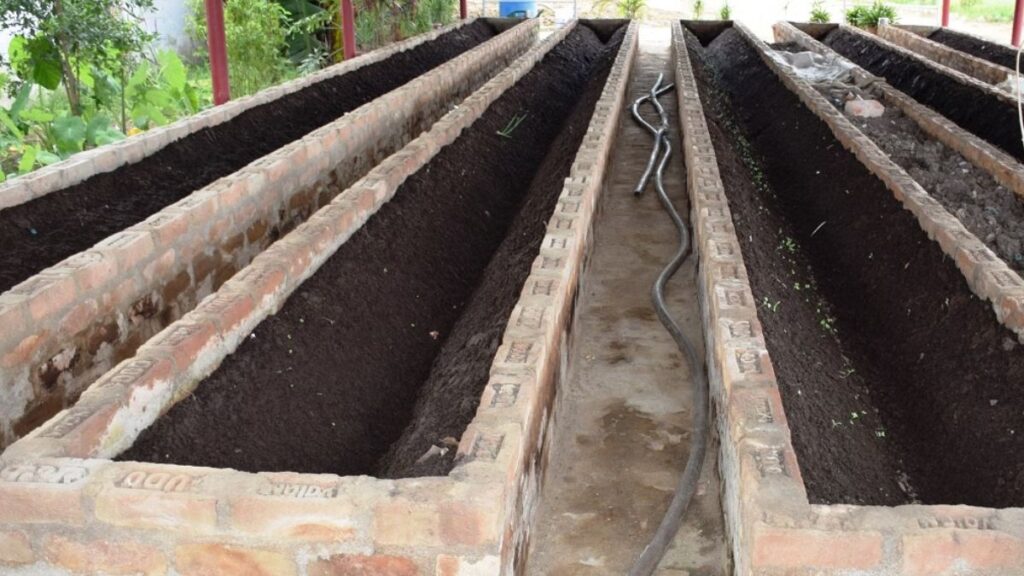
Standard size: 10 ft × 3 ft × 2 ft (length × width × depth). Use brick-and-mortar beds, HDPE tanks, or raised mounds covered with jute sacks. Budget option: old cement rings or stacked tractor tyres.
Step 3 — Prepare the Bedding Material
Start with a 6-inch layer of partially decomposed cow dung mixed with dry leaves or straw. Avoid fresh, hot manure — it burns worms. Pre-compost for 15–20 days first.
Step 4 — Introduce Earthworms
Add 1 kg of earthworms per square meter of bed surface. Best species for India: Eisenia fetida (red wiggler) — available from KVKs, NABARD partners, or local vermicompost producers. Scatter on top; they’ll burrow in automatically.
Step 5 — Add Organic Feed Regularly
Every 2–3 days, add 2–3 inch layers of organic material: kitchen waste, vegetable peels, crop residue, green leaves. Avoid citrus, onion skins, meat, or oily food. Mix cow dung 1:1 with other organic waste for best results.
Step 6 — Maintain Moisture (Most Critical Step)
Keep the bed at 40–60% moisture — it should feel like a wrung-out wet cloth. Sprinkle water daily in summer, every 2–3 days in winter. Too dry = worms die. Too wet = they suffocate.
Step 7 — Harvest After 45–60 Days
Stop adding fresh material 2 weeks before harvest. Finished vermicompost looks dark, crumbly, and smells like fresh earth. Push material to one side — worms migrate to the fresh side, making separation easy. Sieve through a 4mm mesh and bag it.
Step 8 — Store and Sell
Store in shade with 30–40% moisture for up to 6 months. Pack in HDPE/PP woven bags. Apply for state agriculture department quality certification if selling in bulk — it commands a premium price.
Expert Tips to Maximize Vermicompost Profit
- ✅ Start with 1–2 beds as a trial — don’t invest big before you understand worm behavior in your local climate.
- ✅ Sell vermicompost tea too — the liquid leachate from beds is a powerful liquid fertilizer. Collect it, dilute 1:10 with water, and sell at ₹20–₹50 per litre to home gardeners.
- ✅ Partner with nearby organic vegetable farmers — long-term bulk contracts at ₹9–10/kg are more reliable than one-off buyers.
- ✅ Check NABARD and state subsidies before spending — up to 75% of setup cost can be covered.
- ✅ Keep a production log — note feed dates, moisture checks, and harvest weights. Helps you scale systematically.
- ✅ Use WhatsApp Business — before-and-after farm photos have helped many small producers find direct buyers within their tehsil.
Common Mistakes to Avoid in Vermicompost Business
- ❌ Using fresh cow dung directly — it generates heat and kills worms. Pre-compost for 15–20 days first.
- ❌ Neglecting moisture in summer — a single dry day in May can wipe out your worm colony. Set daily reminders.
- ❌ Buying worms from unreliable sources — some sellers dilute with soil. Always buy from KVK-certified suppliers.
- ❌ Adding citrus, garlic, onion, or spicy waste — worms hate these and will abandon the bed.
- ❌ Harvesting too early — unfinished vermicompost can harm crops. Wait for the full dark, crumbly texture.
- ❌ No drainage in beds — waterlogged beds = dead worms. Always ensure drainage holes or a slope.
Vermicompost vs Regular Compost vs Chemical Fertilizer
| Factor | Vermicompost | Regular Compost | Chemical (Urea/DAP) |
|---|---|---|---|
| Production Time | 45–60 days | 90–120 days | Instant (bought) |
| NPK Content | High + balanced | Medium | Very high (single nutrient) |
| Soil Health Impact | Improves long-term | Improves | Degrades over time |
| Selling Price (homemade) | ₹8–18/kg | ₹4–6/kg | N/A |
| Government Preference 2026 | ⭐⭐⭐⭐⭐ Very High | ⭐⭐⭐ Medium | ⭐ Low (declining) |
| Subsidy Available | Yes (50–75%) | Yes | Yes (shrinking) |
The government’s push toward natural farming under PM Pranam Yojana and Paramparagat Krishi Vikas Yojana (PKVY) means vermicompost producers are increasingly favored in procurement and subsidy schemes going into 2026.
Should You Start a Vermicompost Business?
If you have access to cow dung, some farm waste, and a small shaded space — yes, absolutely.
Vermicompost is one of the most capital-efficient and genuinely sustainable agri-businesses available to Indian farmers right now. Start small with ₹15,000–₹20,000. Master 10–15 beds first. Then scale with your own profits and worm multiplication.
In 2–3 years, a 100-bed operation can generate ₹5–8 lakh annually with minimal recurring cost.
The only real secret? Consistency. Feed your worms, maintain moisture, harvest on time. The business takes care of itself.
FAQs — Vermicompost Business in India 2026
Q1. How much can I earn from 1 ton of vermicompost?
At ₹8–10/kg bulk rate, 1 tonne earns ₹8,000–₹10,000. If packed in retail bags (₹15–18/kg), the same tonne yields ₹15,000–₹18,000. A 15-bed setup produces roughly 1.2 tonnes per 60-day cycle, meaning ₹9,600–₹21,600 per cycle depending on your selling channel.
Q2. What is the minimum investment to start a vermicompost business in India?
You can start with as little as ₹10,000–₹15,000 for a home-based 5–10 bed unit using locally available materials. If you already have a shed and free access to cow dung, your main cost is earthworms (₹150–₹200/kg). Larger commercial setups of 50 beds require ₹75,000–₹1,00,000.
Q3. Which earthworms are best for vermicomposting in India?
Eisenia fetida (red wigglers) is the most recommended species across India. Available at Krishi Vigyan Kendras (KVKs), IARI, and most state agriculture universities. Avoid collecting local field earthworms — they are soil dwellers, not composting species, and won’t survive in beds.
Q4. Is vermicompost business profitable without government subsidy?
Yes. Even without subsidy, a 15-bed operation breaks even in the first harvest cycle (60 days). The ROI typically exceeds 200–300% annually since raw material is free and worm populations self-multiply. Subsidies just speed up expansion — the business is independently viable.
Q5. Where can I sell vermicompost in India?
Top buyers include organic vegetable farms, horticulture nurseries, flower growers, terrace garden communities in cities, government agriculture departments (bulk procurement), and platforms like Agribazaar. Direct-to-farmer sales within your district eliminate middlemen and boost your margin significantly.